badge Tech Siddhi: AR


Showing posts with label AR. Show all posts

Tuesday, 13 March 2018

Bose Introduces Audio Augmented Reality Platform and glasses to hear


Unveils the Future of Mobile Sound in Eyewear Prototype

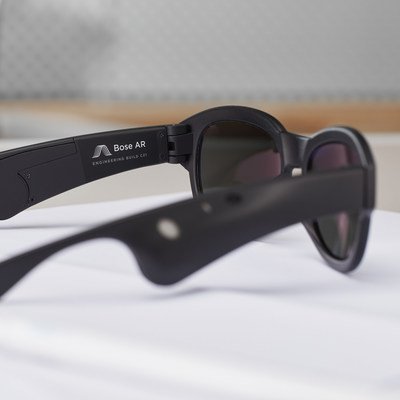
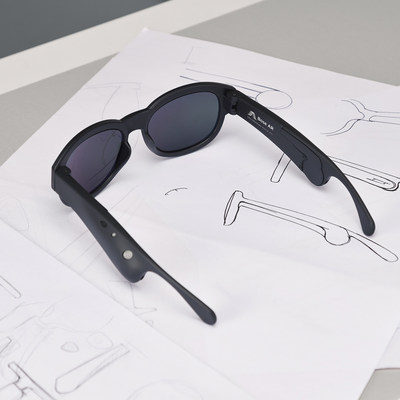
This week at SXSW, Bose introduced Bose AR, the world's first audio augmented reality platform, and glasses to hear— a Bose AR prototype that launches the future of mobile sound.  Bose also announces its SDK schedule date for developers, manufacturers, and research institutions, along with collaborations currently under way, and venture funding for related start-ups.

Unlike other augmented reality products and platforms, Bose AR doesn't change what you see, but knows what you're looking at— without an integrated lens or phone camera.  And rather than superimposing visual objects on the real world, Bose AR adds an audible layer of information and experiences, making every day better, easier, more meaningful, and more productive.


Bose AR debuts a minuscule, wafer-thin acoustics package developed specifically for the platform, representing the future of mobile micro-sound with jaw-dropping power and clarity.  It can be seamlessly built into headphones, eyewear, helmets and more, with no compromise to their existing functionality.  And it allows simple head gestures, voice, or a tap on the wearable to control content— replacing the need to swipe, type, or tap a touchscreen for the same commands.

"Bose AR represents a new kind of augmented reality— one that's made for anyone and every day," said John Gordon, vice president of the Consumer Electronics Division at Bose.  "It places audio in your surroundings, not digital images, so you can focus on the amazing world around you— rather than a tiny display.  It knows which way you're facing, and can instantly connect that place and time with endless possibilities for travel, learning, music and more. And it can be added to products and apps we already use and love, removing some of the big obstacles that have kept AR on the sidelines."

BOSE PROTOTYPE GLASSES— AUGMENTING WHAT YOU HEAR, NOT WHAT YOU SEE
The first Bose AR wearablea prototype pair of glasseswas engineered and manufactured by Bose.  They're Bluetooth compatible with microphones for calls, Siri or Google Assistant.  And they debut a new proprietary technology that keeps audio private.  With an ultra-slim, ultra-light, ultra-miniaturized acoustic package embedded discreetly in each arm, they can fit, function and look like standard eyewear, but sound and function more like Bose headphones— delivering amazing, lifelike performance that no one can hear but you.


THE BOSE AR PLATFORM
The Bose AR platform is purposely straightforward, focused on improving daily life instead of extremes.  In addition to delivering stunning audio quality for listening to music, talking on the phone, or using VPAs, a Bose AR wearable uses sensors to track head motion, and the GPS from an iOS or Android device to track location.  The sensors send the motion and location data to a Bose AR-enabled app that aggregates the information, sending relevant, real-time content back to the user's ears instantly.  It's all done hands-free, heads-up, and wirelessly, so there's no need to grab, read or touch the phone. And it can be used for multiple applications.

FOR TRAVEL Bose AR can make every trip easier and more meaningful, transforming sightseeing into sighthearing.  Like simulating historic events at landmarks as you view them— so voices and horses are heard charging in from your left, then passing right in front of you before riding off in the direction of their original route, fading as they go.  Or letting you listen to a renowned speech "pinned" precisely to the famous person in a monument's statue.  Or telling you which way to turn towards your departure gate while checking in at the airport. 

FOR LEARNING Bose AR can make the world a classroom.  Like translating the sign you're reading.  Or telling you the word or phrase for what you're looking at in any language.  Or explaining the story behind the painting you've just approached.

FOR MUSICBose AR can put playlists right in front of you, so you can control them with gestures as easily as voice or touch.  With your wearable on, you can choose or change your music with simple head nods indicating yes, no, or next.

FOR EVERY DAY
Bose AR doesn't interfere with a wearable's primary purpose— it adds useful information based on where you look.  Like the forecast when you look up, or the restaurants on the street you look down. 

COLLABORATIONS
The Bose AR platform is open to approved developers and manufacturers.  Collaborations underway include ASICS Studio, Strava, TripAdvisor, TuneIn, and Yelp.
Bose is also collaborating with academic research institutions, including the MIT Media Lab to advance human interaction related to augmented audio reality, and the NYU Future Reality Lab.
Additional agreements have non-disclosure terms and will be announced in the future.

VENTURE FUNDING AVAILABLE
Bose will invest up to $50 million in start-ups focused on apps, services, or technologies for the Bose AR platform. 

SDK AND AVAILABILITY The Bose AR SDK, and limited quantities of a refined and updated version of the Bose AR glasses, will be available this summer.  Sign-up information and details can be found at Developer.Bose.com/Bose-AR.


Thursday, 27 July 2017

Top 10 reasons the ZenFone AR is the next big thing


The ASUS ZenFone AR is built from the ground up for augmented reality. There’s a lot to love about this cutting-edge smartphone, but let’s run down the biggest reasons why you should consider picking one up.

1. Tango Technology - Augmented Reality


Tango AR
Tango is the augmented reality system by Google which marries depth-sensing and motion-tracking camera technology. With the right apps, virtual objects can inhabit the space around you in fun, informative, and creative ways. For example, you could size up furniture for your living room, or chase monsters through your kitchen. It’s a brand new world of possibilities with augmented reality and Tango.


2. Daydream Technology - Virtual Reality

VR with Daydream view support
The ZenFone AR is the first Android phone to include both Tango and Daydream support in the same device. With the Daydream View headset, you can enjoy your own personal cinema filling your whole field of view, or dive into immersive games with the help of the included controller. The growing library of Daydream apps means you’ll always have new experiences right around the corner.

3. Next-generation camera

While the TriCam system combines every technology required for fluid virtual reality and augmented reality, the primary 23 megapixel camera can take some incredible shots. It has a large f/2.0 aperture, perfect for shooting in low-light. It can capture video in razor-sharp 4K, complete with optical and electronic image stabilization.


4.       Lightning-fast autofocus

ASUS has been carefully refining its autofocus system over the course of several generations. TriTech consists of three mechanisms working seamlessly with one another. First, there’s traditional object-tracking focus. Then, there’s laser autofocus, which can detect the distance of subjects out to 1.5 meters, even in low light. Finally, phase detection autofocus is specialized at capturing subjects in motion. All of that comes together for a lock in under 0.03 seconds.

5.       Incredible processing power

Thanks to the custom-tailored Qualcomm Snapdragon 821 processor, the ZenFone AR is able to construct vibrant 3D worlds on the fly. This requires not only an impressive amount of sheer processing power power, but energy efficiency, too. We are working with a smartphone, after all, which needs to be able to carry on with usual functions the rest of the day.

 6.       Mind-blowing sound


The finely tuned SonicMaster 3.0 engine produces premium audio in any circumstance. A new 5-magnet speaker design can churn out music louder than ever without distorting or damaging the hardware. Advanced signal processing by way of the NXP Smart AMP can handle audio at up to four times CD quality. Whether you’re in VR, or just relaxing with some tunes, the ZenFone AR will not disappoint.

7.       A beautiful display

When using the ZenFone AR with the Daydream View headset, the screen will be quite close to your eyes. ASUS has made this display exceptionally sharp to maximize immersion. At 5.7 inches, your full field of view will be taken over. The Super AMOLED 2560 x 1440 WQHD screen will produce details at the sharpest definition and with the deepest colors.


8.       Premium construction


The ZenFone AR pushes boundaries, and it feels built for the task. With a burnished leather rear and precision-milled metal frame, you’ll enjoy a true feeling of luxury every time you take the ZenFone AR out of your pocket. During day-to-day use, the Gorilla Glass 4 cover will amply protect the screen. Overall, the fine craftsmanship at play will ensure this phone ages gracefully.

9.       Biggest RAM ever in a smartphone

The ZenFone AR manages to pack in 8 GB of RAM. You can read more about how RAM works and why it’s important here, but the bottom line is that having 8 GB of it in the ZenFone AR ensures it will be able to handle intensive processing tasks of any kind, not just those that have to do with augmented reality and virtual reality.


10.   Cutting edge uses of AR technology

Last but not the least, the augmented reality or AR goes beyond VR in some key respects, enabling users to integrate real and virtual scenes — in effect, allowing you to try on products before you buy. Imagine buying furniture that you often have trouble visualizing in your home. Asian augmented reality (AR) and virtual reality (VR) startup iStaging lets you arrange furniture and appliances in your living space. By integrating the product images in your designated space, thus giving you a concrete visualization of potential purchases.
Bridging the gap between the virtual and physical worlds, augmented reality (AR) app enables students and teachers to visualize 3D models in the real environment, in real time, and at scale desired. AR Solar System, inspiring young kids to understanding the enormity and complexity of their universe. Anatomy 4D helps to discover a world of knowledge about your own amazing hardware. Zenfone AR opens up to plethora of opportunities for everyone irrespective of age.
The ZenFone AR is an absolute feat of engineering. Dig into more details on the ZenFone AR product page.


Thursday, 13 July 2017

ASUS Zenfone AR launched in India for Rs 49,999/- , with impressive tech embedded in it.

ASUS has announced launch of ASUS Zenfone AR the world's first Tango and Daydream enabled phone which opens a new dimension for use of smartphones. The phone is a result of co-operation of ASUS with Google's Tango and Daydream team, and Qualcomm which improvised its Snapdragon 820 series to come up with Snapdragon 821 enabling smoother and Accurate AR , VR experience.
The device comes with 8 GB of RAM and 128 GB internal storage to support resource extensive applications which makes sense with AR focused tech in the phone.

ASUS Zenfone AR
The device in itself is a tech marvel considering the fact that we have a finished end consumer product and not any prototype. ASUS has stood apart from the crowd on many occasions be it the first phone with 4 GB RAM or first phone with a 3x optical zoom. But what we liked most about Zenfone AR is that it packs so much in its compact body. Unlike Zenfone Zoom which was too bulky to be used as a primary phone, the Zenfone AR is quite compact with just 4.8mm thickness on edges and less than 8mm thick at its thickest point. 

Notice the Geyser and Shower shown on big screen is added using AR


Smartphones have changed the way we look at our phones and use them in our day to day life, this transition has come in last 10 years. But today with launch of Zenfone AR, I truly believe that it is going to add more dimensions to mobile usage. We recently discussed about different usecases of using an AR enabled phone.

TriCam System
The device packs in 3 camera on rear with the primary being 23 MP sensor for capturing vivid details. The other two sensors are there to sense depth and motion. The launch event also had live demo of the AR capabilities of the smart phone where in we were shown the future of buying a car with the BMW app , where in user can Augment the car on the phone in real environment and inspect and customize various features as if done in a physical car. Another demo was done by Pune based Renewate demoed their app, which was again very cool as using this app you can plan the interiors, furniture, fittings of your house by using AR.


The Asus ZenFone AR has a 5.7-inch WQHD (2K) (1440 x 2560) display. This large size and high resolution screen makes it ideal for VR apps and games when used with Daydream View, immersing users in incredible VR worlds that appear detailed and lifelike. Super AMOLED technology enables deep blacks and high contrast, further enhancing image quality and 3D effects.
With ZenFone AR and Daydream View, users can explore new worlds with apps like Street View and Fantastic Beasts, kick back in a personal VR cinema with YouTube VR and Netflix, and get in the game with Gunjack 2, Need for Speed and more.
ZenFone AR is designed with the latest, top-of-the-line components to provide high-quality AR and VR experiences. This cutting-edge hardware also makes ZenFone AR one of the most powerful smartphones available.
ZenFone AR features a Qualcomm Snapdragon 821 processor that has been specially optimized for the demanding, real-time calculations of AR. ASUS worked closely with Qualcomm Technologies and Google engineers to help develop methods for efficiently distributing computer-vision workloads, as well as rapidly processing movement and positioning instructions with Tango to deliver smooth, immersive, and compelling AR experiences. It also features the desktop-class Qualcomm Adreno 530 graphics-processing unit (GPU) to deliver supercharged graphics performance and handle the graphical demands of Tango and Daydream applications with ease.

ZenFone AR is the world's first smartphone with 8GB of RAM, enabling it to handle the demands of AR and VR with ease. It also helps with heavy multitasking, allowing users to keep dozens of apps open simultaneously, and instantly switch among them. ZenFone AR also includes 128GB of fast UFS 2.0 storage, enabling users to store a large library of apps, games, videos, photos, and music, and open them quickly.
ZenFone AR is backed by a 3,300mAh battery pack with Quick Charge 3.0 - fastest, most efficient charging technology by Qualcomm to date. This technology enables 60% battery charge in only 45 mins.
 Flipkart is offering INR 2500/- off on Google Daydream View VR Headset along with purchase of ZenFone AR. Additionally, the consumer can avail no cost EMI offer upto 9 months. Every Jio and Zenfone AT user will get up to 100GB additional 4G data and complimentary Jio Prime membership. The user can avail the additional 4G data in the form of one additional 10GB data voucher per recharge or Rs 309 or above, for a maximum of 10 recharges till March’18. This data is over and above the benefits of the pack.

Tuesday, 11 July 2017

5 incredibly innovative uses for Augmented Reality

If seeing is believing, ‘trying on’ seals the deal. Augmented reality or AR goes beyond VR in some key respects, enabling users to integrate real and virtual scenes — in effect, allowing us to try on products before we buy.
Here are some of the most innovative, cutting edge uses for AR technology apart from gaming that we are sure to amaze you.

Home Decor
One truly exciting application for AR and related technologies is to showcase large purchases like furniture that consumers often have trouble visualizing in their home. Asian augmented reality (AR) / virtual reality (VR) startup iStaging lets shoppers arrange furniture and appliances in their own living space. By integrating users’ own photos of their home with product images, the app gives buyers a concrete visualization of potential purchases.

interactive iStaging AR app


Enriching travel and tourism
Augmented reality can give travelers amazing new experiences. Travelers can also use AR to find information about historic events and significant buildings with Wikitude World Browser and Lonely Planet. There are even apps that bring AR out onto the hiking trails, giving users inspiring route guides and AR-enhanced topographic maps.

Wikitude World Browser is widely regarded as the king of all augmented reality browsers, and in a way, serves as a third eye of sorts. While using your smartphone’s camera in a given area, the virtual browser — along with more than 3,500 associated content providers — offers you just about any geographically-relevant information you may find valuable in your travels. Useful information is often presented in the form of Wikipedia articles detailing the hallmarks of a specific landmark, or directions to the nearest ATM location or five-star restaurant.

Education and training
Bridging the gap between the virtual and physical worlds, Augment changes the way we see, imagine, and learn about the world around us.
Augment an augmented reality (AR) app and platform enables students and teachers to visualize 3D models in the real environment, in real time, and at scale. Google Sky Map will give you the ability to identify everything in the night sky. Once installed, just point your phone upward when it’s reasonably dark and clear outside, and Google will point out all the different stars, constellations, and planets that are visible to your phone’s camera.


Shop without the hassle of changing
DressingRoom by Gap, help customers virtually “try on" clothing through a smartphone, Augmented Reality experience. This is how it works – shoppers choose a Gap style that they might be interested in purchasing. Next, they select one of five body types featured in the app so they can “try on" the piece of clothing from anywhere on a Google Tango-enabled device, and if they love it, they can buy it online.


Healthcare
Augmented reality in healthcare has wide reaching implications that will transform the medical sector; from providing real-time data and assistance during complicated surgical procedures, to supporting aftercare and administration, we’ve only begun to scratch the surface of Augmented Reality’s potential benefits to our health and well-being.
Smartphone AR apps today can help retrain the brains of patients suffering from chronic vertigo, help blind people ‘see’ the world around them by rendering 3D surroundings into an audio soundscape or help medical students crush their anatomy classes.
With so many different fields of innovation at their fingertips, it is no surprise that tech-savvy and design enthusiasts want their next smartphone to come equipped with the sophisticated hardware and incredible processing power that can unlock these immersive and exciting augmented reality experiences.


Google has notably been pushing AR/VR technologies with its latest Android OS. The most prominent introduction however, has been the ASUS ZenFone AR launch that took place at CES, 2017 earlier this year.

That’s not all, ASUS recently took to its Facebook and Twitter pages to post a hinting that the super smartphone is all set to launch in India. According to industry sources, the company is planning to launch a smartphone in mid - July.

Friday, 6 January 2017

ASUS showcases world's first Tango Enabled and Daydream Ready phone Zenfone AR at CES 2017

ASUS Zenfone AR is also World's first 8 GB RAM phone.

ASUS today showcased its innovative products in CES 2017. ASUS displayed its first Dual Camera setup phone Zenfone3 Zoom and other devices, but the show stopper for the day was Zenfone AR. As you might have got it with the name AR has something to do with the Augmented Reality. The term which has picked up a lot more meaning by now than just a fun feature. So, ASUS Zenfone AR is the world's first Tango Enabled and Daydream Ready phone (The world's first Tango Enabled phone is Lenovo Phab 2 Pro). For those who are unaware of Google Tango project, it is a project by Google which enables you to combine objects from real world onto your phone screen and you can play around with it. The technology enables you to measure your surroundings, re-imagine your home with virtual furniture and so on.

ASUS Zenfone AR
Unlike Lenovo Phab 2 Pro , which comes with relatively inferior specifications for a device which is supposed to do power intensive tasks, Zenfone AR comes with promising hardware specifications and make this device more of a Flagship Tango smartphone. ASUS Zenfone AR runs on Snapdragon 821 SoC and packs in 5.7 inch , 2560x1440 QHD display. The phone also comes with 8 GB of RAM which is highest in a smartphone as of today. Though I am not a fan of massive RAM in smartphones when you don't actually need them but here it is absolutely required as Tango will need all the power you have packed in your smartphones. With that power you don't have to worry much about heating as the smartphone comes with an advanced Vapor Cooling system.

The smartphone comes with a Tricam setup at rear, which includes a 23 MP rear camera, one camera for motion sensing and another one for depth-sensing. The placement of these three cameras is also quite interesting and despite so much on board it does not cover most of the space at back (remember how Zenfone Zoom had a massive camera at back?).Unlike three-camera systems in other devices, the design of the ASUS TriCam system clusters its array of cameras to reduce their footprint within the phone, enabling the entire phone to be thinner and lighter.

ZenFone AR features a powerful Qualcomm Snapdragon 821 processor that is optimized for Tango, and is the world's first smartphone with 8GB of RAM. ZenFone AR's powerful performance and innovative camera work in conjunction with Tango to enable smooth and compelling smartphone AR experiences. A beautiful, 5.7-inch WQHD Super AMOLED display and a new five-magnet speaker makes Daydream VR apps, games, and videos more immersive and entertaining. Android 7.0 ‘Nougat’ lets users get the most out of ZenFone AR with new multitasking features and other enhancements that deliver a great mobile experience.

“The Snapdragon 821 processor is a perfect fit for a flagship Tango enabled device like the ZenFone AR,” said Amon. “You need a powerful heterogeneous computing and power-efficient chip to handle the intensive processing and complex features needed to optimize and deliver rich augmented reality experiences. We congratulate ASUS on this exciting new product and are excited to now have Snapdragon processors powering devices across their lineup.”
Also onstage to reveal more about ZenFone AR and Tango, as well as demonstrate some of the amazing augmented-reality experiences available through innovative mobile apps and games were Erik Hermanson, Head of Content & Brand Marketing at ASUS, and Johnny Lee, Director of Engineering for Tango. “Our phones already assist us in our day-to-day lives, but we believe they can do even more. We’re excited to see Tango technology incorporated into ZenFone AR, making its capabilities available to more people,” said Mr. Lee. Jeff Kirwan, Global President of Gap, then demonstrated DressingRoom by Gap, an augmented reality app that allows Gap customers to model clothes on a virtual mannequin and view it from any angle.
Following the announcements, ASUS hosted a demo area showcasing ZenFone AR, ZenFone 3 Zoom, and the latest lineup of lifestyle, business, and Republic of Gamers (ROG) gaming products. New lifestyle and business products include the ZenBook UX490 laptop, VivoPC X desktop PC, ProArt PA32U monitor, and ASUSPRO B9440 business laptop. New gaming products include the ROG Maximus IX Extreme motherboard, ROG Gladius II mouse, ROG GR8 II gaming PC, ROG Rapture GT-AC5300 router, and ROG Strix Magnus gaming microphone. Additionally, several desktop and laptop PCs updated with the latest 7th Generation (‘Kaby Lake’) Intel® Core processors were also shown, including the Zen AiO ZN270 desktop, ROG GT51CH gaming desktop, and the ROG GX800VH and G752 gaming laptops.
ASUS won eight CES 2017 Innovation Awards, with products across four competitive award categories honored for outstanding design and engineering innovation. The award-winning products include: ZenFone 3 Deluxe, Designo Curve MX34VQ, Vivo AiO V221, ZenBook 3, ROG GX800, ROG Maximus IX Apex and ROG Maximus IX Hero, and an upcoming powerful ROG gaming laptop.
All ASUS and ROG products will be on display at the ASUS Media Suite at the Trump International Hotel in Las Vegas, from 4:00pm–6:00pm on January 4th, 2017, and from 9:00am-6:00pm on 5th-7th January, 2017.