badge Tech Siddhi: Technology


Showing posts with label Technology. Show all posts

Thursday, 21 May 2020

Tech Mahindra and ChampTrax Technologies Partner to Create Stadium-Like Experience at Home for Global Sports Fans

Tech Mahindra Ltd. a leading provider of digital transformation, consulting and business reengineering services and ChampTrax Technologies, a Canadian sports startup, collaborate to develop a solution to create stadium like-experience at home for global sports fans. Through this partnership, Tech Mahindra and ChampTrax Technologies will provide a solution to herald the next generation fan and player engagement leveraging digital and virtual technologies.


Jagdish Mitra, Chief Strategy Officer and Head of Growth, Tech Mahindra, said, “We have been specifically focused on technologies that will enable experiences in the during COVID and after COVID world. Sports with a live fan experience is something that we will miss now for a while. Tech Mahindra’s sports vertical leveraging our 5G experience will enhance the fan experience globally. This strategic partnership with ChampTrax Technologies will give us an opportunity to bring the best of both the worlds and help sports fans adjust to the new normal.


Tech Mahindra and ChampTrax Technologies will also work on 5G related use cases for introducing holographic virtual fan to the stadium. As part of the collaboration, Tech Mahindra will also support ChampTrax Technologies to reach wider markets and audiences for HearMeCheer solution that aggregates “crowd noise” from at-home spectators real-time, during live games played in fan free stadiums and venues.


Manish Upadhyay, Head Sports Technology Vertical, Tech Mahindra, said, Tech Mahindra and ChampTrax will develop a joint solution to support revival of sports clubs post the COVID-19 pandemic. Sports technology is one of the focused business for us at Tech Mahindra, and we strongly believe that technology will play a crticial role to enable sports clubs to ensure wellness of fans, staff, and players globally.“


HearMeCheer’ solution by Champtrax Technologies combines audio through proprietary algorithms that weigh each household and enable users to yell loudly and not overpower the audio stream. As the audience watches a game with the web app it automatically sends microphone data that aggregates these sounds to create a single audio stream effect of a unified crowd integrated into real-time broadcasts.


Elias Andersen, Founder of Sports Tech Business, Champtrax Technologies, said – “We are very excited to partner with Tech Mahindra and this gives us a huge opportunity to serve their existing and potential customer at such critical times. HearMeCheer is great solution for close door games and we are keen to take it to market with Tech Mahindra.”


As part of the TechMNxt charter, Tech Mahindra is committed towards creating a partner ecosystem to deliver enhanced cutting-edge next-generation technologies like Cybersecurity, Artificial Intelligence, Blockchain, 5G, and Internet of Things, to disrupt and enable digital transformation, to build cutting-edge technology solutions and services for customers globally.
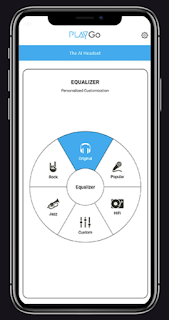
PLAY updates its PLAYFIT app on Google and Apple store for its wearable devices

Gurgaon based technology company PLAY,has released a major software update to the popular PLAYFIT app which hosts all of their wearable devices. 


PlayFIT

“Due to the CORONA pandemic, there has been an obvious surge in the wearable device/app adoption and usage. With Android-10 getting popular both in terms of new smartphones as well as upgrades to the popular older smartphone models, we had started working on the application update and providing a fix to the connectivity patch to take the advantage of BLE (Bluetooth Low Energy) SoC of NORDIC semiconductors as well as U/I and U/X suggestions we had received from our community of users. With this update, we are glad we have been able to provide our users with better app connectivity with their mobile device and host of new features and improved UX design”, commented Mr. Sandeep Banga, CEO at PLAY.
PLAYFIT app boasts of a very user-friendly U/I helping our consumers monitor their fitness regime. The app tracks and displays the user walking/running/exercise pattern, the sleep pattern with mode and duration, etc. The application has features for pre-defined fitness activity that can be tracked and also has the option to add a new exercise regimen should the customer want more customization. Aside from the same, as we build our PLAY community we have integrated a leader board where the user can track their fitness quotient along with 99 other top fitness PLAY community members. Any user does not have to fear loss of data while upgrading their mobile device as PLAYFIT seamlessly integrates the historical data recorded through the old device and displays the same on the new device automatically.

“At PLAY, we remain committed to deep engagement with our customers and the idea is to provide periodic updates to all our customers in future also. Our research and development teams monitor the community feedback very closely for timely application and device updates and enhancements”, he commented. 
In the spirit of “Be-Vocal, Support-Local”, PLAYFIT application has been indigenously designed & developed by development team of PLAY in India and is also hosted on servers in India itself, thereby taking away any data security concerns of its users. It is the smart application for the wearable category of PLAYFIT 21, PLAYFIT 53, PLAYFIT SW75 devices launched by PLAY.  


PLAY products are currently available only in India and UAE. In India, PLAY has online partnerships with Amazon, Flipkart as well as its own e-store (https://store.worldofplay.in/) besides being available in offline stores across the country. In UAE, PLAY has (online) partnerships with Amazon, Noon as well offline retail partnership with Sharaf DG and Jumbo for availability across UAE.

Tuesday, 19 May 2020

Uber introduces new safety features for Riders and Drivers amid COVID-19 crisis

Uber India today announced  at its first virtual press briefing the launch of a range of COVID-19 specific safety features and policies that will change the way you ride the next time you use the app.


The announcements include an interactive Go Online Checklist for both riders and drivers, a mandatory mask policy for riders and drivers, pre-trip mask verification selfies for drivers, and updated post-trip feedback mechanism and a cancellation policy. All these new features are aimed at building a new product experience, which will help protect everyone, every time they use Uber.


Beginning today, riders and drivers will see a number of new additions in the app, such as:


  • Go Online ChecklistsBefore a driver can go online, they will be asked to confirm, via a new Go Online Checklist, that they’ve taken certain safety measures and are wearing a face mask. A similar checklist has been built for riders. Before every trip, they must confirm that they’ve taken precautions such as wearing a face mask and washing or sanitizing their hands. 
  • Mask Verification: Before drivers are able to start accepting trips, they will be asked to take a selfie with a mask on. Uber’s new technology will verify the driver is wearing a mask.
  • Accountability for all: We are adding new options for feedback including if a rider or driver is not wearing a mask or face cover.
  • Updated cancellation policy: Drivers and riders can cancel trips if they don’t feel safe, including if a user is not wearing a mask or face cover. 
  • New seat limits: To allow for space between the driver and rider during an Uber ride, we’re advising riders not to sit in the front seat. Only two riders will be allowed in a car and they’ll have to sit in the rear seat. 
  • Rideshare Health Safety Education: Working with global and local public health authorities, we have compiled safety tips and recommendations that will be sent to all riders and drivers. 


Announcing the new features, Sachin Kansal, Global Senior Director of Product Management at Uber, said, “Over the last two months, our global tech and safety product teams have been hard at work building a new, product experience for riders and drivers. Today, as India eases its lockdown, it’s important we take all necessary precautions to help keep ourselves safe and to make the next trip safer for all. These new features and policies have been rolled out globally, and we will keep enhancing and revising them as needed to ensure a safer product experience for all.”

Below is the list of cities where Uber services are available as of 19th May, 2020 during Lockdown 4.0

  1. Amritsar
  2. Asansol
  3. Bengaluru
  4. Chandigarh
  5. Coimbatore
  6. Cuttack
  7. Daman
  8. Delhi
  9. Durgapur
  10. Faridabad
  11. Ghaziabad
  12. Gurgaon
  13. Guwahati
  14. Hubli
  15. Jalandhar
  16. Kochi
  17. Kozhikode
  18. Ludhiana
  19. Mangalore
  20. Mehsana
  21. Mohali
  22. Mysore
  23. Panchkula
  24. Patiala
  25. Prayagraj
  26. Rohtak
  27. Silvassa
  28. Sonipat
  29. Thiruvananthapuram
  30. Thrissur
  31. Tiruchirapalli
  32. Udaipur
  33. Vapi
  34. Visakhapatnam

Uber Essential is available to riders in Bangalore, Bhopal, Bhubaneswar, Hyderabad, Indore, Mumbai, and Nashik.  

Thursday, 14 May 2020

LinkedIn brings virtual events to connect communities online, Integration between Events, Pages, and Live helps organisations stay connected

Microsoft and Pegasystems are strong examples of companies holding virtual events to take their in-person engagements online. Both organizations live-streamed the keynotes of their respective CEOs to reach a broad base of customers, followers and prospects. 


LinkedIn, the world’s largest professional network, today announced the global launch of a virtual events solution, a tighter integration between LinkedIn Live and LinkedIn Events, to enable companies to stay connected and strengthen relationships with their online communities in real time. 


Using LinkedIn Live, companies can now host virtual events by streaming live to event attendees. This integration between LinkedIn Live and LinkedIn Events helps companies to host live, real-time events in a trusted environment, attract the right professional audiences, drive strong reach and engagement, and get more mileage for their events with a dedicated hub for videos of the event on their Pages.


In October 2019, LinkedIn launched LinkedIn Events globally and in March 2020, the platform enabled companies to create an event via their LinkedIn Pages. Today, LinkedIn launches an integrated virtual events solution with Events, Pages, and Live that allows companies to build a more personalised online event experience for their audiences.


Announcing the launch, Ajay Datta, Head of Product, India at LinkedIn said“As the business world moves from in-person conferences to virtual events, we recognise how important it is to equip our customers with tools to bring the professional community together - online, in real time, and at scale, in the safest way possible. Real-time interactions are at the heart of building relationships, and now more than ever before, these real-time interactions are critical to our customers. So we decided to accelerate our product roadmap to launch an integrated solution that helps bring the professional community together virtually, and strengthens relationships with targeted audiences.” 


Companies can now drive better reach with targeted audiences by sharing the event with their Page followers and by sharing direct invitations of the event with their first-degree networks. Further, organizers can drive strong engagement, both, before and after the event by posting and ‘recommending’ updates to them. Once the virtual event is over, organisers can keep the conversation going with the Video tab -- a dedicated hub for a Page’s organic video content. The Video tab will help companies extend the shelf-life of their live video content.


LinkedIn Live has already seen great traction with 23X more comments per post and 6X reactions per post than native video, helping companies foster real-time engagement with their networks. Additionally, LinkedIn data shows that 82% of audiences prefer seeing live-streams from brands than regular social posts, and 45% of senior leaders are considering a more permanent shift to virtual events and conferences. By combining Events and Live, LinkedIn hopes to equip brands with a powerful product suite to host virtual events


Microsoft and Pegasystems are strong examples of companies holding virtual events to take their in-person engagements online. Both organizations live-streamed the keynotes of their respective CEOs to reach a broad base of customers, followers and prospects. 

Thursday, 7 May 2020

EduBrisk starts Classroom to Virtual Classroom program that enables schools to go live within 24 hours

EduBrisk; a brain-friendly educational solutions platform to schools and students today announced the beginning of their revolutionary educational program ‘Classroom to Virtual Classroom within the next 24 hours’  that will enable schools and freelance teachers go live within 24 hours.

EduBrisk said to have invested in high-quality human resource to start this education program in India and have on-boarded 30 schools since Lockdown to name a few GD Goenka Public School-Siliguri, QMS Schools-Kolkata, St Peters- Ernakulam, Al Ameen Public School-Kochi, Guardian Public School-Kochi, Shantiniketan Indian School-Qatar, Guardian Public School-Kochi, National Central School Adoor, BPMS, Trivandrum, Paradise Public School, Varkala etc  that are going live with the help of this virtual program. They are also planning to on-board 150 schools within the span of 2 months. For the program they have tied –up using multiple third party videoconference tools based on Schools preference.

EduBrisk

The process begins once the respective school reaches out to EduBrisk and provides the download of their data which includes; teacher profiles, student profiles and parent profiles.   Post the reception of the data EduBrisk conducts a School Teacher Empowerment Program (STEP) for all Teachers designated by the School that takes around 24 working hours. At the end of the workshop, the designated Teachers are well-versed with the processes and methodologies of EduBrisk, leading to higher motivation, and reduced teacher-training costs.

Post the completion of the program, once the schools prepare and share their scheduled timetables, EduBrisk provides the meeting platform along with the respective content. The link for the Virtual Classes will then be shared by the Class Teacher to their students, enabling them to log on using either a Laptop, Tablet, or Mobile Phone. Once the session is LIVE, the Teacher marks the attendance of the students present, similar to the attendance process followed in physical classrooms as well as using  Virtual Classroom Feature in EduBrisk Platform to track usage of teachers and students and test report of students classwise and individually. Thereafter, students can interact with the Teacher LIVE using the Chat feature that comes as a standard within the security-enabled video conferencing tool being used (Microsoft Teams, Zoom, WebEx, GoToMeetings, etc) based on respective schools preference. At the end of the session, the recorded version of the interaction will be shared by the Teacher, which students can access for review and revision.


Speaking on the momentous occasion, Mr. Saiju Aravind, Founder of EduBrisk Knowledge Solutions stated that, 

“Very often constraints bring out the best in us. A couple of months back could  we have fathomed empowering the 3 stake holders in the school ecosystem with the state of the art teaching-learning-testing and analytics based interventions in just 24 hours??!!

And to our own pleasant surprise, it’s happening every day. Virtual classes and regular classes would become seamlessly integrated in the coming period of two months Revolution in Education has begun. 

At EduBrisk we feel that our efforts for the last 3 years to empower teachers have happened in an unprecedented manner.

Seeing the current situation and the demand for virtual classes, we decided to launch our 24 hours virtual program that will enable many developing countries to adapt to the paradigm shift in world educational patterns”


The EduBrisk Platform contains the digitized versions of the entire CBSE/NCERT syllabi, along with additional inputs from our Team of Educators designed to make teaching easier for both Teachers as well as Students.  Also, the EduBrisk Digital Learning Platform and all Workshops conducted by them are fully compliant with Global Regulatory Bodies such as KHDA, ADEC etc

To use EduBrisk’s Virtual program effectively, the following elements are recommended to be kept in place:

1.    A good 4G internet connection

2.    A video conferencing application (to be provided by EduBrisk)

3.    A Laptop (preferable) or Tablet, with a good front facing camera and microphone


EduBrisk operates on a per student, monthly subscription model that varies depending on the number of students/subscriptions required. For Teachers of Subscribed Schools Platform is Subscription and training is completely free .


For more information on the this Programme : https://online.edubrisk.com/

Thursday, 30 April 2020

MediaTek Dimensity 1000 SoC to come with V1 Video Codec Technology on Android Smartphones

MediaTek has announced it will enable YouTube video streams using the cutting-edge AV1 video codec on the MediaTek Dimensity 1000 5G SoC. The MediaTek Dimensity 1000 is the world’s first smartphone SoC to integrate an AV1 hardware video decoder, enabling it to play back AV1 video streams up to 4K resolution at 60 fps. With its improved compression efficiency, AV1 gives users incredible visual quality and smoother video experiences, while using less data.


Video streaming is the number one activity in smartphone use, so by using the Dimensity 1000’s more power efficient hardware-based AV1 video decoder, users can enjoy longer battery life while still streaming at the best quality settings. Combined with its ultra-fast 5G connectivity in a single chip, the Dimensity 1000 leads the industry in design and capability.


“MediaTek is engaged in consistently upgrading its offerings to enhance user experience, and AV1 technology is a prime example. Video is now the most used form of communication, with 70% of Millennials and Gen Z reportedly using streaming services,” said Dr. Yenchi Lee, Assistant General Manager of MediaTek’s Wireless Business Unit. “Industry reports state that the video streaming market is likely to expand at a CAGR of 19.6% and touch $124.57 billion by 2025, and it is one of the principle drivers of 5G services. MediaTek is leading the way in enabling effective video streaming with AV1.”


The AV1 video codec is creating a landmark change in the video streaming industry. First released in 2018 by the Alliance for Open Media (AOMedia), AV1 is royalty-free, crafted to replace the VP9 codec and become the Internet Video Codec (NETVC) standard. AV1 is an ultra-high-performance video codec technology that delivers 30% more compression efficiency over existing VP9.


"AV1 has become an increasingly important format to allow high-resolution playback on handheld devices, and we're excited that MediaTek has implemented dedicated AV1 hardware to advance its adoption, such as what's included in their Dimensity 1000 5G SoC,” said Matt Frost, Director of Product Management of Google Chrome. “As mobile video streaming becomes more prevalent, new use cases like MediaTek's emphasize the important work of developing next-generation codecs."

Saturday, 25 April 2020

Apple iOS 13 has sever security flaws including zero click hack in its mail app - Researchers

A new potentially serious software vulnerability has been discovered in iOS 13 that works via the default Mail app on iPhone and iPad. Security researchers say the iPhone has a severe flaw in the native iOS Mail app that makes it vulnerable to hackers.
 
Representation image only


Commenting on this Satnam Narang, Principal Research Engineer at Tenable said, "The recent disclosure that multiple zero-days in the Apple iOS Mail application were exploited in the wild is significant and noteworthy. One of the flaws can be exploited without user interaction (also known as zero click) on iOS 13. The vulnerabilities also affect iOS 12, though interaction is required in most cases.

Exploitation of these flaws would allow an attacker to leak, modify or delete emails within the Mail application. However, the researchers note that combining these flaws with an unpatched kernel vulnerability would provide an attacker with full device access, though that information has not been identified as of yet.

While Apple has issued fixes for these flaws in the beta version of iOS 13.4.5, devices are still vulnerable until the final version of iOS 13.4.5 is readily available to all iOS device owners. In the interim, the only mitigation for these flaws is to disable any email accounts that are connected to the iOS Mail application, and use an alternative application, such as Microsoft Outlook or Google's GMail."

Wednesday, 26 February 2020

Microsoft CEO Satya Nadella addresses students at the Young Innovators Summit in Delhi

Microsoft CEO Satya Nadella today met a gathering of students and educators at the Young Innovators Summit organized by Microsoft India at the India Habitat Centre, Delhi. The Young Innovators Summit brought together over 250 students and educators in Delhi NCR.  In conversation with Anant Maheshwari, President, Microsoft India, Satya Nadella spoke about the role that technology will play in transforming the education ecosystem over the next decade, outlining the opportunity students have today to solve some of the world’s most pressing problems with technology.

Speaking at the summit, Satya, said, "We need to reformulate the relationship between technology and learning. It is very interesting to witness the way young innovators think today. What excited and inspired me from my meetings with students was the quality of their ideas, the scope of their ambition, deep passion and deep empathy turning into action. This is truly transformative, and is how societies and economies move forward."

Watch Satya Nadella in conversation with Anant Maheshwari at the Young Innovators Summit

The Young Innovators Summit also showcased examples of technology-powered innovation from the student community in India. Three young innovators talked about how they are using technology to connect the world and solve some of the biggest social, environmental and health challenges of our times.

  • USING AI TO SAVE LIVES: PRATIK MOHAPATRA
OrganSecure, built by Pratik Mohapatra, uses a sophisticated set of machine learning algorithms to quickly match organ donors with recipients, providing real-time updates to people in need of a transplant. His idea of an AI-powered app that aims to match organ donors with people in need of an organ transplant in real-time, was one of the three winning ideas at the 2019 Microsoft AI for Good Idea Challenge.

A coding enthusiast, Mohapatra has been developing apps since he was 14 years old and has a keen interest in applying technology to life sciences. In his words, “While watching a web series that revolves around organ donation, I realized the pain and emotional trauma people go through when waiting for a transplant. I started digging deeper about the problem and spoke to doctors at leading hospitals in Bengaluru to comprehend the magnitude of the issue,” he shares.

Read more here.

  • FIGHTING AIR POLLUTION WITH AI: ISHLOK VASHISTHA
Taking from their experience of living in the vicinity of New Delhi, which has one of the world’s worst air quality, Ishlok and four of his friends decided to use technology to tackle the problem. The team, comprising Ishlok Vashistha, Aakash Bhadana, Vasu Kaushik, Dipesh Narwat, and Bharat Sundal from Manav Rachna Institute of Research & Studies in Faridabad came up with Caeli, a smart anti-pollution face mask and portable nebulizer to help those with breathing ailments like asthma and other chronic respiratory diseases.

The mask and nebulizer are connected to a smartphone application via Bluetooth. The Caeli mask features an air filtration system and an Air Quality Index (AQI) sensor that constantly monitors the quality of air, while the Caeli app controls the schedule of the drug dispensed from the nebulizer depending on the user’s prescription and pollution levels. Their idea won the team the runners-up position at the Microsoft 2019 Imagine Cup World Championship.

Read more here.

  • TRANSFORMING LEARNING THROUGH MINECRAFT: NAMYA JOSHI
Namya Joshi, a seventh-grade student at Sat Paul Mittal School, Ludhiana, Punjab, has become an icon and inspiration for many. Namya, a 13-year-old, loves training teachers and has been a crusader for making learning fun through technology. She has been helping teachers at her school convert their class lessons into interactive Minecraft sessions. Namya has conducted multiple Skype sessions across countries like Vietnam, India, Hungary, Finland, for both teachers and students to initiate them into the use of Minecraft in classes.

“Minecraft is a great platform”, she says. “If a child does not like reading books, for example, you can make them in Minecraft and get the child interested.”

Namya has been conferred with the REX Karamveer Global Fellowship and Karamveer Chakra Award, and is a winner of the ‘UNESCO Clubs 2018-2019 Worldwide Youth Multimedia Competition’ for creating a virtual library of books on Minecraft. Read more here.

Thursday, 31 October 2019

Microsoft Research AI Project helps Dehradun RTO in automating driver's license testing

Do you know a whopping 59% of respondents to survey conducted by SaveLIFE Foundation admitted that they did not give any test to obtain a driving license. The numbers seems to be correct, given I have personally seen people around me claiming the same.The challenges with this system range from the subjectivity of each evaluator to the burden of evaluation falling solely on human shoulders. A Microsoft Research team under HAMS (Harnessing AutoMobiles for Safety) project is currently enabling the Regional Transport Office (RTO), Dehradun, Uttarakhand to automate the same process.

“The main challenge in the traditional driver’s license test is the burden placed on the human evaluators and the resulting subjectivity that a candidate faces. Automation using HAMS technology can not only help relieve evaluators of the burden but also make the process objective and transparent for candidates,” says Venkat Padmanabhan, Deputy Managing Director, Microsoft Research India, who started the HAMS project in 2016. Padmanabhan developed HAMS along with Akshay Nambi, who joined the project as an intern and is now a Senior Researcher at Microsoft Research India, and Satish Sangameswaran, Principal Program Manager, Microsoft Research India, who helped the team bring HAMS out of the research lab and into the real world through external partnerships.


Microsoft Research’s HAMS project enables the driver’s license testing to be an objective and transparent process that helps grant licenses to well-tested drivers. The system doesn't require an invigilator to be present with the candidate in the car. The system is competent enough to get the final results on the basis of the driver's actions and conditions of the environment just in time. While it may sound like a very IoT kind of project where lot of sensors needs to be at work, the team at Microsoft has utilized a simple smartphone to achieve the goal.

HAMS in essence uses a mounted smartphone on car's windshield which uses rear camera to monitor real time road condition  as well as the driver's gaze using front camera of the phone. On top of it, the team has developed AI models for efficient and robust operation.


For driving tests, HAMS has been customized to include capabilities such as precise tracking of the vehicle’s trajectory during designated test manoeuvres, for instance, parallel parking or negotiating a roundabout. This tracking enables HAMS to determine precisely, for instance, whether the driver stopped in the middle of a manoeuvre for longer than is permitted or tried to course correct by rolling forward and backward alternately more times than allowed. Today, if you take the driver’s license test at the Dehradun RTO, you will be doing so in just the company of a smartphone affixed to your car’s windshield. HAMS, running on the smartphone and on an edge server onsite at the testing track, will do the rest and produce a detailed report shortly after you finish navigating through the test manoeuvres.

“The successful deployment of the HAMS-based driver license testing at the Dehradun RTO is a significant step towards the Transport Department’s goal of providing efficient, world-leading services to the citizens of Uttarakhand. We are proud to be among the pioneers of the application of AI to enhance road safety,” said Shri Shailesh Bagauli, IAS, Secretary, Government of Uttarakhand. “On an average, over 50 candidates take the HAMS-enabled automated license test every day at the Dehradun RTO. Due to the comprehensive nature of testing, just about 50 percent candidates pass the test, ensuring that only qualified drivers are given a driver’s license,” says Nambi.

Sunday, 14 April 2019

Stellar Research finds, 7 out of every 10 individuals are vulnerable to data breach & privacy RISK while disposing off their devices

Global data care expert Stellar has conducted & announced findings of world’s largest known study of residual data in used devices.
The study analysed a sample size of total 311 used devices comprising hard drives, memory cards, and mobile phones at Stellar’s central laboratory in India. The analysis revealed that a majority 71% of these devices contained personal data, Personally Identifiable Information (PII)and sensitive business information. In a larger perspective, the report establishes that 7 out of every 10 individuals are vulnerable to data breach & privacy risks while disposing their old storage devices.
The study was performed to ascertain the awareness levels amongst device owners, regarding usage of secure data wiping methods at the time of selling old storage devices. It also aims to create awareness about data privacy risks when file deletion or drive formatting are used with a faulty assumption as permanent data removal action.
The devices analysed in the study were procured from individuals, online portals & resellers across multiple locations. Majority of these devices were analysed using a publicly available DIY software - Stellar Data Recovery that discovered thousands of files containing personal data.
The residual data can easily fall into wrong hands, and can lead to identity thefts, financial frauds, personal security threats & user privacy issues. Businesses can be vulnerable to data theft & misuse of business-critical information like financial reports, trade agreements, intellectual property, business intelligence and trade secrets to name a few.
"This lack of awareness among customers at large can lead to an alarming rise in acts of cybercrime. It also underlines the acute importance of adoption of data sanitization procedures by individuals and organizations as a safeguard at time of disposal of old IT assets”, said Sunil Chandna, CEO, Stellar. “The Personal Data Bill 2018, when approved as a law could trigger development of a secure ecosystem leading to high awareness & risk mitigation actions by consumers & organizations,” said Chandna. 
The latest 2019 study is a second and a part of continued program of Stellar to measure the risk awareness using NAID Second-Hand Device Study Principles.
NAID (National Association for Information Destruction), an international watchdog for the secure data destruction industry with more than 2000 member companies globally, has commended Stellar for being the first organization to conduct this study by using NAID principles.
 “The Stellar Second-Hand Electronic Device Study and similar studies before and after, demonstrate the gravity of the problem to regulators, businesses and consumers,” said Bob Johnson, NAID founder and i-SIGMA CEO. “By employing NAID’s principles to conduct the study, STELLAR has assured the results are accurate and the personal information found in the process was fully protected at all times”, said Bob.
The detailed report is available for download using the link - https://www.stellarinfo.com/ResidualDataStudy.php

Tuesday, 9 April 2019

Harness Partners with Google Cloud Platform to Bring Next-Generation Continuous Delivery to Kubernetes and Cloud-Native Applications

Harness, a Continuous Delivery-as-a-Service platform, today announced that it has partnered with the Google Cloud Platform and is now available for purchase in the GCP marketplace — giving Google Cloud customers the ability to automate the Continuous Delivery process and deliver artifacts to production quickly, securely, and repeatably.
As a Google Cloud partner, Harness empowers engineering teams to move fast and ship code without the fear of failed deployments. With its Smart Automation technology, Harness provides the first-ever solution to automate the entire continuous delivery process. By applying unsupervised machine learning to Continuous Delivery — a new technology called Continuous Verification — the platform understands a microservices baseline and can initiate automatic rollbacks when irregular activity is detected, avoiding business downtime or widespread failures. To date, Harness has helped customers such as McAfee, Home Depot, Nutanix, Bank  of Santander, and Soulcycle reduce errors in production deployments by up to 99%, while increasing overall engineering velocity by up to 8x.
Key features include:
  • Pipeline Builder. Instead of taking hours to build pipelines, DevOps teams can build and execute complete continuous delivery pipelines in minutes with serial or parallel workflows across their applications, services, and environments.
  • Workflow Wizard. Complex pipelines become simple with out-of-the-box support for canary deployments and blue/green deployments using cloud technologies such as Kubernetes.
  • Continuous Verification. Release teams finally know for sure that deployments succeeded or failed by leveraging unsupervised machine learning to automatically verify application deployments in production. They can detect errors quality and regressions from tools such as AppDynamics, New Relic, Splunk, Elastic and Sumo Logic, as well as use the Harness 24×7 Service Guard feature to monitor the performance of releases indefinitely.
  • Automated Rollback. Instead of painful, manual rollbacks, Harness can automate rollbacks to the last working artifact version and run-time configuration with no required scripting or code.
  • Continuous Security. Harness bakes in security into every step of the deployment process. Harness uses its SecretStore or deep HashiCorp Vault integration to seamlessly reference secrets across all deployment workflows and pipelines. Harness also keeps a full audit trail of every deployment, so teams know the who, what, where and when behind every action.
  • Real-Time Delivery Analytics.DevOps and engineering team leads now have powerful insight into every application, environment, version, and deployment. Teams can debug deployments in seconds, and role-based access is baked into every part of the platform.
"Vuclip gains tremendous advantages from the combination of Harness and Google Cloud," said Jishnu Kinwar, VP of Technical Operations at Vuclip, a leading global technology-driven media company delivering on-demand entertainment to emerging markets. "We use Harness to deploy our artifacts into GCP, relying on Harness machine learning to verify success and help automate rollbacks when required. The two solutions ensure that we're using the very latest Continuous Delivery technology to better serve our customers worldwide."
"We're thrilled to partner with the Google Cloud Platform and help equip DevOps and engineering teams with the safe and seamless ability to deliver applications to the Google Cloud," said Jyoti Bansal, Harness co-founder & CEO. "We see a rapid migration of legacy and monolithic applications to microservices and Kubernetes environments hosted by Google Cloud, and Harness is here to help developers with a platform that accelerates microservices and cloud adoption and reduces the risk of application downtime — while giving engineering teams their weekends back."
The Harness trial is free for two weeks and can be accessed here.