badge Tech Siddhi: Security


Showing posts with label Security. Show all posts

Friday, 31 January 2020

EC-Council Launches CEH Master Hacker Certification

EC-Council, the leading global information security certification body, has recently launched Certified Ethical Hacker (CEH) Master credential to address the rising demand for performance-based training and certification for ethical hackers. 

We are committed to using innovative and new approaches to train cyber experts to prevent cybercrime and to promote a safer and secure cyber environment. CEH Master uses a new methodology to prepare the students for real-world jobs. It will go a long way in sharpening the skills of the students who will be better prepared to address the challenge of preventing cybercrime,” says Mr Jay Bavisi, Founder and CEO of EC-Council Group.

CEH Certification Path
CEH certification path
This new initiative is in keeping with EC Council’s commitment to align the curriculum with the demand of the industry. It is for this reason that CEH has emerged as a certification of choice in over 145 countries since 2003. With the launch of the CEH Master, EC Council continue to set standards in the ethical hacking certification and training sector. 

CEH Master credential is awarded to hackers that have both the CEH and the CEH (Practical) certification. It prepares the candidate for actual challenges by evaluating their capability against problems from the real-world. This unique approach is a departure from the regular both the multiple choice exams and simulation-based exams and allows the candidates to hone his/her skills and abilities by working on actual real world challenges. 

With the next exam, security professionals are required to demonstrate the understanding of attack vectors by performing network scanning to identify live and vulnerable machines in a network, performing operating system banner grabbing, system hacking, steganography, steganalysis attacks, enumeration and even cover tracks. They must also conduct a variety of web server and web application attacks including directory traversal, parameter tampering, XSS, perform SQL injection attacks and different types of cryptography attacks as part of a rigorous 6 hour online and proctored exam. This is truly revolutionary.

CEH Master is a badge of honour for any ethical hacker who wants to make a mark in this challenging field. To become a CEH Master, a candidate must successfully pass the  CEH  exam and demonstrate competency in managing real world hacking challenges via the CEH (Practical) Exam. This demands the prospective ethical hacker to discover and exploit real-time vulnerabilities while auditing the systems set up by EC-Council in the cloud, thus enhancing the challenge and better preparing him/her for the job.

Wednesday, 31 January 2018

LG and Honeywell Demo Automotive Cybersecurity Solution

Michigan: -- Honeywell and LG Electronics signed a memorandum of understanding to develop and demonstrate a unique automotive software technology and infrastructure solution to address threats associated with the increase in vehicle connectivity technology. The two companies showcased a collaborative cybersecurity solution at the 2018 Consumer Electronics Show in Las Vegas earlier this month, and at the recently concluded 2018 North American International Auto Show in Detroit.

The collaboration between LG and Honeywell provides automakers a next generation cybersecurity solution for system communications within the vehicle as well as an increasing amount of external communications via cellular and satellite connectivity.

The two companies are focused on the unserved needs of the auto industry to cover the entire cybersecurity chain from individual gateway protection through threat monitoring of fleets. The solution to be developed by the collaboration will integrate LG's intrusion, detection and protection software (IDPS) technology for securing vehicle hardware from external attacks with Honeywell's IDPS solutions for securing internal vehicle communication and control networks along with its security monitoring and analytics capabilities for security operation centers.

The collaborative solution helps ensure passenger vehicle safety and security by identifying and validating software commands and data generated by the more than 100 million lines of code that govern modern vehicle operation. LG's electrical gateways and security modules, telematics control unit (TCU), and electronic control unit (ECU) can be an effective toolset for detecting and reporting anomalies preceding a mechanical failure or intentional hack of the vehicle. Honeywell's software detects anomalies and protects in-vehicle network traffic when the global security operation centers receive captured data transmitted in either real time or via a scheduled download. These security centers monitor large fleets to provide analytics coupled with an understanding of underlying issues to provide effective remediation options to the auto maker.

Honeywell's team of software experts and technology solutions combine more than 60 years of automotive domain experience as a leading global Tier 1 automotive supplier with useful Honeywell experience in critical industrial safety applications. Honeywell's automotive software enables real-time vehicle performance diagnostics that can help increase vehicle reliability and up to a 5 percent reduction in warranty costs.

LG's vision for the automotive components business is to become an innovation partner for vehicle electrification by using accumulated know-how from the consumer electronics industry. Vehicle components is LG's fastest growing business and is expected to play a major role in the future growth of the company. With a wealth of experience in mobile communications, home appliances, consumer electronics and connected vehicles, LG plans to lead the next-generation vehicle components market through collaboration with Honeywell's differentiated technologies.

Tuesday, 22 November 2016

Get ‘Smarter at every step’ at 2016 Aviation ICT Forum India

As the fastest-growing passenger market in the world, India is expected to surge from being the ninth largest civil aviation market sized at US$16 billion today, to become the largest by Airlines, airports and other stakeholders are transforming rapidly, enabled by new technology trends that promise a smarter experience at every step. The aviation industry must focus on those mega-trends and technologies that will deliver better insights into our passengers and operations, improve ‘life on the go’ and enable better passenger relationships and operational efficiency.

In this dynamic scenario, forums such as the Aviation ICT Forum India help to transform intent into a decisive road map. The India Aviation ICT Forum 2016, in its fourth year, will take place on 16-17 December, 2016 at the Grand Hyatt, Goa, where industry delegates will explore how the aviation industry can become Smarter at Every Step of the journey.

With more than 60 years’ experience working collaboratively at the heart of Indian aviation, SITA is transforming Indian aviation through the provision of modern, standardized IT and communication infrastructure across the country.

This leading pan-industry forum provides a unique opportunity for executives and business professionals to identify and understand the latest aviation trends that will shape their business. The agenda will cover the latest aviation industry trends and conversations with prominent industry leaders on the areas of self service, smart passenger systems, baggage management, mobility, business intelligence, Internet of Things, cybersecurity, smart identity, border management, smart aircraft and other innovations that are transforming the industry.

Along with these insightful sessions, SITA will also be launching an 360 degree India IT Trends report catering to the aviation sector focusing on trends around passengers, baggage handling, airports and airlines in India..
The forum will also include an exhibition area which will showcase the latest in aviation technology and live demos where delegates will be able to experience first-hand the most advanced solutions.


Almost all CEO’s from the Indian aviation industry have expressed their keen interest to attend this year’s ICT forum. Some of the early speaker confirmations received (in alphabetical order) are from Air India, Airports Authority of India, Spicejet, Go Air, Hyderabad Airport, Sri Lankan Airlines, Jet Airways, AERA, Chandigarh International Airport, Kunnur International Airport, KPMG, CAPA, SITA and SITA Lab.


Friday, 3 June 2016

Alibaba launches Face-Lock security App - 'Privacy Knight' exclusively on 9Apps


Chinese mobile internet giant Alibaba Group has announced the launch of Privacy Knight, free app-lock with Face Lock feature that protects mobile privacy from intruders. Equipped with Face Lock, the fastest and most accurate unlock solution in the world, Privacy Knight enables users to unlock their protected apps through a 1-second-selfie.


Announcing the launch, Ebrahim Popat, Country Manager of 9Apps, an Android Marketplace within Alibaba Mobile Business Group, says, “Face Lock is set to change the way people protect their privacy. It's the next big thing after fingerprint lock. The age of Face Lock is here.

Simplicity and reliability are key factors that users care about when selecting a security app. Privacy Knight works on a 1-second-step for face locking, saving users the trouble to remember patterns /pincode. Meanwhile, the Face Lock and Blink Detection setting ensure a 99.47% accuracy of face recognition, more precise than any other recognition models in the world. What makes Privacy Knight even safer is that no user information upload is requested, since Face Lock is accessible offline.


Besides Face Lock, Privacy Knight also offers users excellent protection including App Lock, Vault, Clean, Themes, Intruder Selfie, Fake Cover, Fake Icon, and more.

Privacy Knight is currently on Android and is available for download on 9Apps starting June 1. Download to step in the Age of Face Lock! For more information, click download .

Wednesday, 23 September 2015

16 characters in Google's Chrome address bar and it's gone

An interesting bug is said to be present in one of the most used browsers , Google Chrome. The bug is found by security researcher Andris Atteka from Latvia. The blog post says 

"Recently I reported a crash bug in Google Chrome (issue #533361). This issue reminded me of the recent Skype vulnerability - both occur with simple URL strings. So how can you crash Google Chrome? By adding a NULL char in the URL string:

http://biome3d.com/%%30%30"

 Once you hit this URL in your chrome browser you , the browser will crash  immediately, even hovering your mouse over the link will cause the crash or atleast this particular tab will crash if not the whole browser.

Turns out to be that the crash can be reproduced by replacing "biome3d.com" with a single character like 'a' and the bug lies in parsing null present in the URL.

The vulnerability was reported as a security bug but the bounty was turned down as it is deemed as a DOS attack rather than a security issue, said Andris in his blog. Earlier the bug was thought to be only affecting desktop versions of Chrome Browser but some users have reported that this is reproducible on Android version of the browser as well.

Interesting aspect of the bug is that a user szhu created a maze game (pic below) wherein the maze comprises of trees and bears, you have to hover your mouse over bears to reach from one end to another but the moment you touch trees your tab will crash and now you know why. 

Maze Game

You can also try this game by heading on to Github page , though hovering over will only crash your current tab, but we recommend to close all your important tabs and then try the game in case you accidentally click on any of the trees it will lead in crashing of the browser itself.

Tuesday, 22 September 2015

Ghost Push Virus: Over 6 lakhs plus users in a day affected says Cheetah Mobile

Cheetah Mobile Security Research Lab today announced through a press release that they have discovered a new type malware named "Ghost Push" which is believed to have affected over 600,000+ users in a day as per the research company. Cheetah Mobile which also claimed to be world's fourth largest publisher of applications worldwide said that the virus is being distributed through non-Google app stores. This has raised serious concerns about the kind of check third party app stores does for applications published on their platform. 

Ghost Push Virus


India ranks number two in terms of number of affected devices, with 1,44,199 devices confirmed to be affected by this virus. Cheetah Mobile also said that this is most widespread and infectious virus they have ever seen. The virus spreads through external SD card or browser add ons and installs unwanted applications such as 'Monkey Test' or 'Times Service' on the device. Once these applications are installed you cannot simply uninstall them even after doing a factory reset. In terms of damage these applications consumes your device resources, such  as memory, battery , processing power etc thus slowing your device, and consuming large amount of cellular data making deep cut in your pocket.

How to detect it?

As of now Cheetah Mobile's own developed applications Clean Master and CM Security can detect the infection and the firm is also said to be working on a toolkit specifically aimed at Ghost Push removal to keep phones safe.

For now if your device is affected by the virus you can uninstall it manually by following steps mentioned in CM Blog.

Affected Applications:

Below is a list of applications identified to carry Ghost Push virus by CM Research labs.

WiFi EnhancerPinkyGirlsWordLockSettingServiceSex Cademy
TimeServiceXVideo Codec PackFast Boosterboom pigiVideo
Indian Sexy Stories 2AmazonTalking Tom 3WhatsWifiFruit Slots
Assistive TouchHubii NewsPhoto CleanHot VideoWifi Speeder
Accurate CompassitouchSuper MarioLemon BrowserWiFi FTP
All-star Fruit SlashLight BrowserSmartFolderMultifunction FlashlightIce Browser
Happy FishingXVideoSimple FlashlightAssistive TouchPronClub
MonkeyTestMemory BoosterDaily RacingHot Girls

What should you do?

If you have any of the above mentioned applications downloaded thru third party app stores or it is present in your mobile without actually installing it then follow link given above to manually remove it. In future make sure you don't install applications from third party app stores without verifying the application and use third party app stores only if it is really required, Google play store is rich in its variety of content and you can get most of the required applications or their alternatives from this trusted play store.

Tuesday, 4 August 2015

Panasonic launched thinnest and lightest toughbook CF-54 for Rs 1,39,000 in India

Panasonic today unvieled its yet another rugged device, Toughbook CF-54 which is claimed to be thinnest and the lightest in its category. With smart business users demanding access to data anytime and anywhere, mobility devices are becoming integral components of the overall technology landscape. This PC is appropriately suitable for smart business professionals who are always on the move. With the ruggedity it offers it can also be used for usage by service engineers in the automotive diagnostic industry, field work and other business verticals, mainly for indoor maintenance, without compromising on the aesthetic appeal of the PC. It can also be customised as per customer usage with integrated ports, 3G, dedicated GPS and other customisation. 

"It offers optional smart card reader, fingerprint reader and contactless smart card reader and various interfaces and options like Serial Port, VGA, PC Card, Rugged USB etc."
Panasonic Toughbook CF-54


The Toughbook CF-54 is a unique tool in its ability to transform the way mobile professionals work – wherever and whenever that might be and is 29.8 mm thin and 1.99 kg light. This makes it approximately 50% thinner and 25% lighter than the previous model CF-53. The CF-54 is equipped with the new 5th Generation Intel® CoreTM i5-5300U vProTM Processor with 3 MB cache, 2.3 GHz up to 2.9 GHz with Intel® Turbo Boost Technology with 4Gb RAM expandable upto 16Gb. It has a sunlight viewable screen that enhances the screen for easy outside viewing. With Spill Resistant Keyboard, vibration, shock resistant features, it sets another level of durability. It is 2.5 feet drop shock resistant .It has a good battery backup with 11hrs operational backup, it also has an option of hot swappable battery feature enabling you to change batteries without shutting down the computer, allowing you to work 24X7 if your work demands.  It offers optional smart card reader, fingerprint reader and contactless smart card reader and various interfaces and options like Serial Port, VGA, PC Card, Rugged USB, 2nd LAN, etc.


These Toughbooks Priced at Rs.1,39,000, are also built for easy integration into existing IT infrastructures and for smooth deployments and ongoing support, thus providing organizations with longer life cycles, translating to lower total costs of ownership. With such solutions, Panasonic wants to differentiate in the premium segment using innovative technology and the company is optimistic to bring about more such technologies in future which could provide the country with better solutions, and meet the needs of its customers across diverse markets.

Friday, 31 July 2015

Android phones running on JellyBean to Lollipop vulnerable to Android Mediaserver Bug

Security researchers from Trend Micro has claimed to find out a major security issue which can render Android devices apparently dead, non-responsive with a lifeless screen. The firm claimed that security flaw exists from Android 4.3 jelly bean to the latest version i.e. Android 5.1.1 Lollipop. If the claims are true than more than half of devices running on Android Operating system are on risk, matter becomes more serious when you get to know that no patch is applied to Android Open Source Project (AOSP) to fix this vulnerability since May 2015. 

The news broke out just after, Google announced a security update to fix Stagefright vulnerability which could have affected as many as 950 million devices. The latest flaw can be exploited in two ways, one through malicious apps and other through evil website specifically created to mislead users and hack the device to render it useless. The app method is more dangerous as it can cause long term effects if its embedded with an MKV file that registers itself to auto-start whenever the device boots would cause the OS to crash every time it is turned on.

Image for illustration purpose only


Vulnerability Description:
The vulnerability lies in the media server service, which is used by Android to index media files that are located on the Android device. This service cannot correctly process a malformed video file using the Matroska container (usually with the .mkv extension). When the process opens a malformed MKV file, the service may crash (and with it, the rest of the operating system).

The vulnerability is caused by an integer overflow when the media server service parses an MKV file. It reads memory out of buffer or writes data to NULL address when parsing audio data.

  • This will cause the device to become totally silent and non-responsive. This means that:
    • No ring tone, text tone, or notification sounds can be heard. The user will have have no idea of an incoming call/message, and cannot even accept a call. Neither party will hear each other.
    • The UI may become very slow to respond, or completely non-responsive. If the phone is locked, it cannot be unlocked.
Potential threat scenarios: 

As mentioned above, there are two ways that this attack can be exploited: the user can either visit a malicious site or download a malicious app.

There are many common techniques that could be used to lure a user to a malicious site. We’ve discussed in the past how repackaged apps pose a problem for users who may have a hard time differentiating legitimate apps from repackaged ones.

Whatever means is used to lure in users, the likely payload is the same. Ransomware is likely to use this vulnerability as a new “threat” for users: in addition to encrypting on the device being encrypted, the device itself would be locked out and unable to be used. This would increase the problems the user faces and make them more likely to pay any ransom.

Further research into Android – especially the mediaserver service – may find other vulnerabilities that could have more serious consequences to users, including remote code execution.

Friday, 10 July 2015

Security researchers hack 3 politicians over public WiFi to spread awareness

Are you one of those who breathe bits and bytes over the air all the time, then this article is a must read for you. Recently an investigation conducted in London has showcased how easy it is to get access of your email, finance , social networking and other details when you are using public WiFi in places such as Cafes, Hotels, Metro Stations etc. In Jan 2015, a similar experiment showcased how a 7 year old hacked public wifi.

The investigation was done jointly by Security and privacy software company F-Secure and penetration testing expert Mandalorian Security Services and Cyber Security Research Institute to conduct the test. The test was conducted on three politicians with their consent.

Image for illustration only
The politicians, deliberately selected from the most powerful chambers in UK politics, were Rt. Hon. David Davis MP, Mary Honeyball MEP and Lord Strasburger. The exercise was carried out with the permission of the politicians who, despite holding important positions within the different parliaments, admitted that they had received no formal training or information about the relative ease with which computers can be breached while using public Wi-Fi – a service they all admitted to using regularly.

Commenting on his email being accessed, Davis said: “Well, it’s pretty horrifying, to be honest. What you have extracted was a very tough password, tougher than most people use. It’s certainly not ‘Password’.” Alarmingly, the password would have been broken no matter how strong it was. Public Wi-Fi is inherently insecure - usernames and passwords are shown in plain text in the back of a Wi-Fi access point, making them simple for a hacker to steal.

To underline the risk, an email was drafted by ethical hackers Mandalorian and left in his drafts folder destined for the national press, announcing his defection to UKIP. His PayPal account was then compromised, as it used the same username and password as his Gmail – a common habit.

In the case of Lord Strasburger, a Voice over IP (VoIP) call he made from a hotel room was intercepted and recorded using technology freely available on the Internet, and relatively easy to master. Strasburger said, “That’s very worrying. This is very powerful equipment. The thought that a beginner could be up and running in a very few hours is really worrying. I think it proves that people (when they are using technology) need to know a lot more about it. In the end, they have to look after themselves, because it really is down to you, no one else is going to do it.”

Mary Honeyball MEP, who sits on the EU committee responsible for the ‘We Love Wi-Fi’ campaign, was browsing the Internet in a café when the ethical hacker sent her a message seemingly from Facebook which invited her to log back into her account, as it had timed out. This was how she unwittingly gave her login credentials to the hacker, who then accessed her Facebook account.

Honeyball, who was using a tablet issued to her only days before by the European Parliament’s technology officers, was particularly concerned about the lack of advice she had been given. “I think something should be done because we all think that passwords make the whole thing secure. I always thought that was the point of passwords. I am surprised and shocked,” she said.

Each hack not only demonstrated the simple steps a hacker can take to circumvent password protected services, but also how the personal data could be used for further attacks. “The average person will think that a hacker knowing which sports team I follow is a pretty useless piece of information,” said Steve Lord, director at Mandalorian. “But once he knows that, he can craft a phishing email specifically for you and your likes, knowing that you will be more likely to open it. Once you click on a link within that email or open an attachment, they have you – they will load malware onto your devices and then you will end up giving away all of your information. Not only that, but your company information too, if you use your devices to access the company network.”

Sean Sullivan, Security Advisor at F-Secure, has this advice for people using public Wi-Fi: “People shouldn’t be afraid to use public Wi-Fi – it’s a fantastic service. But they must understand that there are risks and it is their responsibility to protect themselves. This is simply done using a piece of software called a Virtual Private Network (or VPN). For phones and tablets, these are available as an app. Our Freedome VPN will encrypt all data travelling from the device to the network, meaning that the hacker will steal nothing of use. Simply turning it on gives you the best protection you can possibly have to stay safe over public Wi-Fi, so you can focus on what you’re doing instead of worrying about staying safe.”


Sunday, 24 May 2015

First phone with 4 GB RAM, ASUS Zenfone2 review

Asus announced its new entry to already successful line of Zenfone series last month, the Zenfone2. Zenfone 2 has its USP in having 4 GB RAM in a smartphone for the first time, however there are lower end models of the same phone which comes with 2GB RAM. We have got the Asus Zenfone 2 ZE551ML version for the review, this variant comes with 32 GB ROM, 4 GB RAM and quad core Intel Atom processor clocked at 1.8 GHz. Enough of introduction, now let's dive deep into the device and see what it has for you.
Zenfone2
ASUS Zenfone2


Look and feel

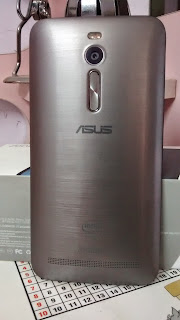
Asus Zenfone 2 takes the Zenfone line of models to a next level in terms of design and looks. Though the body is made of plastic but the faux metal coating on the back cover gives it a premium look. We have got the grey colour variant and it definitely looks premium. On the front we have a 5.5 inch display with concentric circle design on the bottom going in line with design of previous  Zenfones. On the top there is an earpiece placed below which we can see the ASUS branding. On right side of earpiece there is an array of sensors and a 5 MP front camera. At bottom of the display there lies three capacitive buttons viz. back, home and multi tasking placed left to right in same order.
Zenfone2 Front
Zenfone2 Front

Despite of being a 5.5 inch device, the phone easily fits into the hand and offers a better grip than many other phones of same size. Back is curved and tapers when it reaches to the edges from all sides, hence the better ergonomics. 
ASUS Zenfone2 Side view
Asus Zenfone2 Sideview


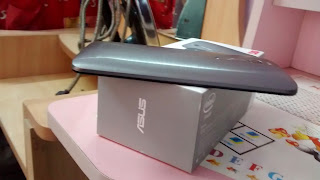
Both the side edges are void of any buttons, that means there is no rocker button or power button on either of the sides, instead power button is placed on top which I feel is not the best position for power button.

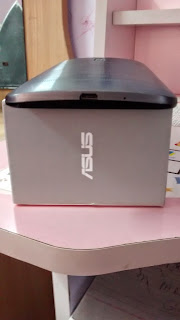
The bottom edge of phone is home to charging slot and mic. Top edge sports 3.5 mm audio jack and power button.

ASUS Zenfone2 bottom edge

ASUS Zenfone2 top edge


Back of the phone is made of plastic with faux metal coating, the back has all elements centrally aligned which are dual LED flash light, 13MP rear camera, volume rocker buttons. Look a bit down and you will see speaker grill which is almost as wide as the phone itself giving illusion of very strong speaker, but that's not the case removing back cover reveals a very tiny speaker and you can feel the same when its used. Once the cover is removed you can see two dual SIM card slots, micro SD card slot and a massive battery beneath which is not removable.
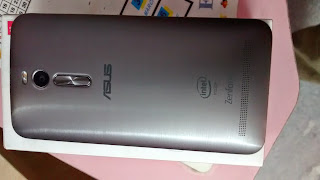
ASUS Zenfone2 Back view


Box Contents:


Device, Wall charger, USB cable, Warranty book, user manual.

Specifications and Feature:

ASUS has just hit the ball right , with giving a lot of buzz words space on its robust specification sheet. ASUS runs on latest Zen UI which is based on Android Lollipop with a lot of customization and few bloats.  Our review unit is powered by Intel Atom quad core processor clocked at 1.8 GHz , backed by 4 GB RAM and has 32 GB internal memory. However a higher version with 64 GB ROM and processor clocked at 2.3 GHz and a lower specification version which comes with 2 GB RAM and 16 GB ROM. On sensors front device comes with usual sensors as proximity sensor, G-Sensor, E-Compass, Gyroscope, Ambient light, GLONASS, GPS. For connectivity phone comes with 802.11ac Wifi, bluetooth, 3G/4G/2G support and NFC. 

Display:

On display front ASUS Zenfone2 has a 5.5 inch and it doesn't boast with best of the displays available but with 1920x1080 resolution and 403 ppi does the expected work and it played all sort of videos pretty well thrown at it. By default phone ships with balanced mode for display which offers accurate colors, user can well adjust settings to reading mode, or custom mode to change the settings. Viewing angles and touch response are great and does not lets you down. 

Software and Performance:

ASUS Zenfone2 comes with ZenUI build on top of Android 5.0 which I personally feel is the best customization of Android till date. The apps , themes and background gels well in material design of Android Lollipop. The lock screen is beautifully customized with option of double tap to wake up the screen (this is life saver as the power button is not that user friendly), If you think that the size of the display is too big for you to handle you can select one hand mode and adjust the phone area to work upon by simply dragging the corner to desired place. 

Performance of Zenfone2 is very impressive, we didn't faced any lag while operating the phone, multitasking worked smoothly and gaming experience is equally good. Intel processor handles the apps pretty well and we didn't faced any app crash issues.

Attention is paid to many software aspects of the device in terms of security, user modes etc. There is a kid mode in which you can set the timer and your kid can enjoy selected apps and once the time is up it becomes unusable for the kid, you can hide your applications, contacts, call history etc in case you need it. 

On battery front this device goes a leap forward from its predecessor and 3000 mAh strong battery lasted entire day with more than 40% battery to spare. The phone was connected to a 3G network and all social media apps were allowed to sync on the go. More importantly the phone's battery didn't dropped drastically when camera was in use which is a huge improvement from Zenfone5. Zenfone5 comes with ASUS Boostmaster technology which works same as Qualcomm Quick Charge or Oppo's VOOC charge. Boostmaster comes quite handy and now the Zenfone2 doesn't needs to be connected to a charger for all night.

Camera:

On the launch event , ASUS stressed too much on capabilities of its camera, Indian famous photographer Dabbu Ratnani himself was present at launch event and explained how he liked camera of Zenfone2. This made us expecting on a higher side, however we found camera to be just better than average but not outstanding as we would have liked.

Apart from normal camera settings there are other modes available (including manual ) which allows user to set the camera with best settings for a particular situation.

ASUS Zenfone2 Camera Modes

All the modes are self explanatory, Auto mode still is best mode to capture variety of shots, if you are a pro photographer then you would love the Manual mode which gives complete control in your hands, HDR and Depth of Field modes are other two settings which we loved.

Below are few sample shots from camera.
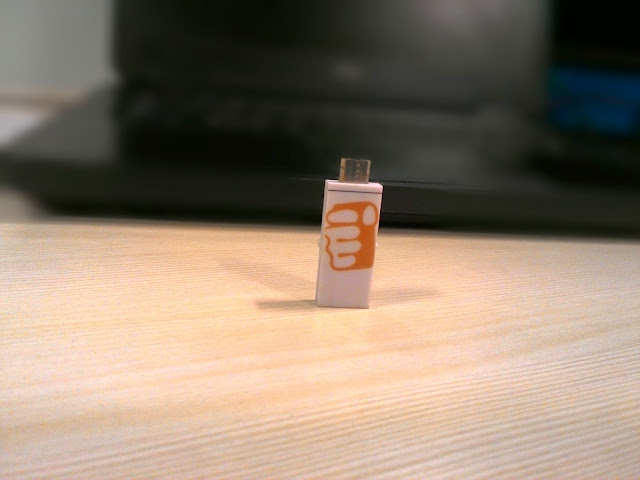
Depth of Field Mode (Macro)
Day light shot (Auto)

Day light shot (HDR)


Verdict:

Zenfone2 offers look and feel of a high end premium flagship device but that doesn't mean its competitors are likes of Samsung Galaxy S6, LG G4 etc. The device is specifically manufactured and priced to compete likes of One Plus One, Xiaomi, Huawei, Micromax etc i.e. its what you can get best for the price. So if you are ok with the size of device and you don't mind those sharp curves towards edges Zenfone is one of the best choices available today for this price range. For 23999 you are getting 64 GB storage , 4GB RAM and latest android OS with one of the best customizations available in the market. If you are not a die hard Apple/Samsung fan and want to have perfect value for money device which you can be proud of go for it, it won't let you down.

Pros: Good display, Processor, RAM, Software
Cons: Average Camera, Weak speaker

Monday, 4 March 2013

Mobile Phones security: Insurance Vs AntiVirus

In this era of smartphones where users are now spending thousands of rupees to get a decent smart phone, concern for the security of such devices is also increasing. A 5 second event can bring you loss of thousands (in case of theft/loss). With the technology advancing to cloud computing and ability to access anything, anywhere , anytime from your smartphones when you are logged into your accounts, lost of your so called smart phone can also make you loose your precious, personal data as some one else will be having the access to the same. To secure our devices from physical theft we can insure our phones with insurance companies and to secure our data we have choice of antivirus softwares which provides you facility to block access to your phones content remotely in case of theft/lost.

Lets have a look on both of these options.

1) Insurance

Cost: around 3% of your device cost.

Validity: 1 Year.

Scope:
Fire (very rare chance to happen)
Riot, Strike, terrorist activities (rarer than first case)
Theft (most likely case)
Accident

Insurance covers your smart phone for the  above mentioned risks including theft but from past experiences around me I will say it is not that friendly for you as it excludes theft from unattended vehicles, mysterious disappearance, breakdown, loss by water etc.

Even if it is a genuine theft case then also you need to file FIR (for every 40 cases of mobile theft police files FIRs of only around 6 cases), but in India at almost every police station you will find it difficult to prove that your phone is really stolen and not lost because of your carelessness. Even if you think you succeeded in convincing them because they are writing in their register you are  mistaken as they are just entering it as an incident in their files not FIR. So make sure to get a copy of FIR if it happens to you (may god it not happen :) ). So after all this when FIR reaches to your insurance company it may again get rejected for even slightest of mistake in your claim.

Pros:  If claim gets thru you get your money back to buy another one :). Only applicable to physical theft.

Cons:  Very complex procedure to claim, ambiguity over  terms and conditions, covers only for 1 year.

2) Antivirus 

Cost: Vary from vendor to vendor ~Rs500

Scope:
Data security
Virus attacks,
Call Blocking
SMS Blocking
Spam protection
Anti-theft

Advantage with Antivirus is that, it protects you from virus attacks, spam, unwanted callers. At the same time some of Antivirus provides you Anti-theft package which allows you to remote lock your phone, track your device, receive SMS from the new SIM when your SIM is replaced this way you can track your phone easily by getting number of other party, block your phone when SIM is changed, wipe out your existing data.

This way you can- be sure that your personal data is not in other hands, track your mobile, and be secure from malwares.

Pros: Data Security, increased productivity, mobile tracking/blocking in case of theft, easy upgradation.

Cons: Helps you to secure your data and track your lost phone but does not guarantee recovery of your loss. :(